Be the Leaky Faucet Guy
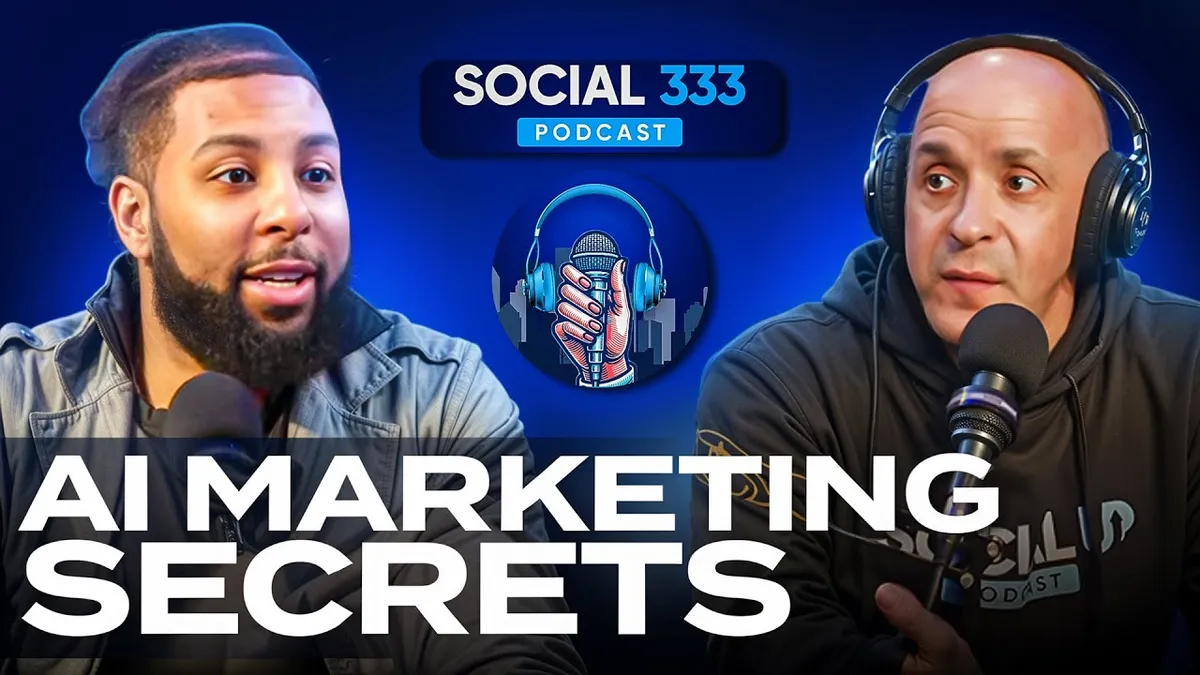
Chris Bentley runs the Social 333 Podcast and comes at marketing from real estate, which made for a useful conversation — he's run the campaigns himself, so we skipped the introductory part.
Don't be a plumber. Be the leaky faucet guy.
The thing most people get wrong about branding is trying to be findable for everything.
There are ten thousand plumbers competing in any major city. If you present as a plumber, you are one of ten thousand results and you will lose to whoever has the bigger ad budget.
So narrow it. I'm not a plumber, I'm the leaky faucet guy. Water main burst? Not me. But if your faucet is keeping you awake, I'm the person you want.
That does two things at once. You rank above the generalists for the specific thing, and you become the authority on it, because owning a lane and being the expert in it are the same act. You might not be the person for a flooded house. You know everything there is to know about the other problem.
Then go deep. Make content around that one thing. Get third-party validation — an article, a feature, someone else certifying that you know your subject. Each of those compounds, because the claim isn't coming from you.
Why most funnels don't work
Chris asked about the biggest mistake he sees, and mine is the same: people build funnels that aren't functional.
I liken it to a toddler with a toy phone. Hello? Hello. They're holding a whole conversation, mimicking the shape of the thing perfectly, and nothing is connected.
Plenty of businesses have exactly that. A form on one page, a thank-you on the next, maybe a video. Behind it, nothing. No nurture, no follow-up, no mechanism for what happens when someone isn't ready today. Every automated function the funnel exists to perform is missing.
Then they come to an agency and say funnels don't work, they paid someone fifteen thousand dollars and got nothing. The tool worked fine. Nobody explained what it was for.
Stop proposing on the first date
The other version of this is going straight for the sale.
People come to us wanting two million dollars in the next fifteen days. Have you run ads before? No. How many leads last month? Four. So we're going from four leads and no advertising history to two million inside a fortnight.
It's the equivalent of proposing marriage on introduction. Ask for the number first. Have a couple of conversations. Establish whether you're compatible.
Practically: generate attention, offer something genuinely useful in exchange for contact details, then spend a few weeks explaining what you can do before asking for a call. Nobody subscribes to a plumber's newsletter. But a free virtual inspection — hop on a video call, show me the problem, I'll diagnose it from here — that's worth someone's email, and it saves you a callout to discover it was a washer.
Pick a horse and ride it
Chris described something I see constantly. Three months of direct mail, decide it's rubbish, switch to Facebook ads. Four months of that, two weak leads, switch to YouTube. Repeat forever.
All of it works and none of it works.
The person who's done direct mail for thirty years gets results from direct mail because they stuck with it. That's the whole explanation. Give anything three to six months minimum, or you never learn enough about it to make it work, and you'll conclude the channel failed when what actually happened is you left before it started.
Pick one and ride it out. Then optimise it properly before adding the next.
One exception worth naming: if you need return quickly, paid social is the only lever I know that scales on demand. It's honestly pay to play. You spend, you reach a known number of people, you get a predictable number of clicks. Everything else takes longer to build.
Brands or nothing
Chris asked what I see coming. This part is bleak, and I believe it.
Within three to five years, I think anyone who hasn't committed to building a brand is on a downhill slope or out of business. The obscure freelancer with no name behind them gets replaced.
Not because they're worse at the work. Because coming up behind them are people with funnels, ad teams, PR teams, content teams, appearing on podcasts and in publications. That arrives like a wave, and you either get on a board or you watch it from the beach.
The reversal is already visible. Large corporations that owned entire categories are being displaced by small teams who are effective and, crucially, known.
Chris put the practical version better than I could. Someone is deciding who lists their house. They search two names. One returns a single line and a photo with a dog. The other returns features, interviews, a channel, ads that follow you around afterwards. Same competence, possibly. Completely different outcome.
The days of checking the box are over. Having an Instagram account isn't a marketing strategy — a ten-year-old has one.
What's actually new in AI
Everyone's chatbot conversation is about chatbots, and the early ones were binary: if yes, send this; if no, send that.
What's changed is context. We're building omni-channel conversations — someone emails, the system pulls everything already known about them, reads the thread and responds appropriately. Then if they call, or message on social, or hit the site chat, it knows it's the same person and references what was said elsewhere.
That's the meaningful shift. Not that a machine can reply, but that it can hold one continuous relationship across every channel a customer chooses to use.
Listen to the full episode
Watch on YouTube | Listen on Spotify | Listen on Amazon Music
Marketing Secrets Using AI, Sales Funnels and Branding. Social 333 Podcast with Chris D. Bentley, March 2025.
The automation layer behind a funnel that actually functions is what Ignite Funnels exists to build.


