If You Can't Lead Yourself, You Can't Lead Anybody
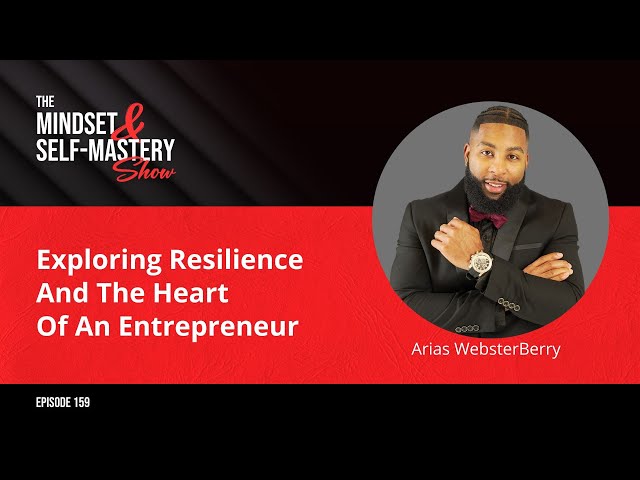
Nick McGowan runs The Mindset and Self-Mastery Show, and he does something most hosts won't: he refuses to skip past the difficult part to get to the success part. We spent most of the conversation in the difficult part.
If you can't lead yourself, you can't lead anybody
Mindset is the foundation under everything else, and self-leadership is the foundation under mindset. What that actually means, for me, is the willingness to be honest with myself and to have uncomfortable conversations in private.
I have them every morning. Out loud, often. Don't hit snooze, you've got things to do. Go and work out, because you'll feel worse if you don't. When I'm not hitting the mark, I say so to myself plainly rather than letting it drift.
My girlfriend had to get used to it. She used to ask who I was talking to.
That's what self-mastery is in practice. Not a feeling of control — a habit of keeping yourself honest about whether you're still pointed at the thing you said mattered.
Where the resilience actually came from
Nick asked what shaped it, and the honest answer starts a long way before business.
My father was tall, charismatic, quick with words, and good enough at basketball to earn a scholarship to Rice. Then addiction took hold, and it took the scholarship with it. He struggled with it for the better part of fifteen years.
My mother made the call that he couldn't be around while that was going on, and she made another decision I've come to appreciate more with time: she never spoke badly about him to me. I grew up without a negative image of my father. I was angry that he wasn't there, and I didn't really understand why.
When I was twelve or thirteen, she decided I was old enough to hear it from him directly and in his own words. We flew back for Thanksgiving. He and I went to play basketball and had a long, hard conversation about the choices he'd made.
I could see it was difficult for him. No father wants to lay out his failures to his son. He was as honest as you can be with a thirteen-year-old.
Four or five months later he was killed, in an altercation with police at the side of a freeway. It was my freshman year of high school.
I didn't handle it well. My grades collapsed. I was angry constantly. Even sport took a back seat, which for me was unheard of. It took me years to recognise that the not-caring was a coping mechanism rather than a personality.
At the time the conversation didn't give me closure. Looking back on it as an adult, it gave me something better: an explanation I could carry, in his voice, that I wouldn't otherwise have had.
Context is real. So is choice.
Nick raised the systemic side of it — the deliberate flooding of low-income American neighbourhoods with drugs, and what that did to a generation of families. It's real and it's indefensible, and nobody living through it knew there was a larger design behind it.
And at the end of it, every person is still responsible for their own choices. Experimenting with something when you don't know how you'll react is a decision. Doing it when people depend on you is a decision. You might avoid addiction and end up in prison instead, or dead.
I hold both of those at once. I feel for him, because he couldn't have known where it went. And I don't think the context erases the choice.
The reason that matters to me isn't judgement. It's that I had the same context available as an excuse and went the other way. Drugs were freely around me. I'd wanted to be an entrepreneur since I was a kid, and at some point it became obvious that the two paths didn't lead to the same place. I had to pick one. I didn't know how hard the one I picked would be. I knew where the other one went.
Adversity doesn't break you. It builds you. But only if you do something with it.
Never as high or as low as you think
A client of mine, someone who's watched me over years, said recently that what she finds remarkable isn't any particular success — it's that when something blows up completely, I simply keep going.
That's less impressive than it sounds. It comes from knowing the why rather than the what.
I've had a business making six figures a month and been effectively out of that business the following month. I've been in penthouses with a yacht parked outside, and I've been at points where I couldn't afford a drink to feel sorry with. The vehicle has changed many times. The destination hasn't since I was a kid.
Once you've been at both ends you understand you're only ever a decision or two from either. That's sobering in a useful way. It flattens the highs and the lows, and it keeps your attention on the thing that doesn't move.
One thing most people don't know
I used to jump rope competitively.
It started, as these things do, with a girl. I asked her to hang out after school, she said she had practice, and practice turned out to be a jump rope team. I went along assuming I knew what jumping rope was, being an athlete.
What I saw was people doing backflips and cartwheels, jumping over each other into double dutch ropes, flipping off each other's hands mid-rope. It looked like ninjas. Technical, brutally difficult, and completely absorbing.
My mother was baffled — I played basketball and football — until she watched a session, at which point she signed me up. We went to Nationals at the sports complex at Disney World and performed at a Houston Rockets halftime show.
It also hurts more than you'd think. Catch yourself with the rope on a real trick and you'll have a welt for a week and a half.
The endurance and precision it built stayed with me for years. It's also the first time I remember choosing the harder, stranger thing because it was interesting rather than because it was expected. That instinct hasn't gone anywhere.
Watch the full episode
Listen to the full episode
Watch on YouTube | Listen on Spotify | Listen on Amazon Music
Exploring Resilience and the Heart of an Entrepreneur. The Mindset and Self-Mastery Show with Nick McGowan, January 2025.
Thanks to Nick for not rushing past the hard part.
The business version of self-leadership is documenting what only lives in your head. That's what Ignite Funnels is built for.


