The Question I Ask Before Entering Any Business
Jeanne Omlor and I got into risk on Business Wealth Impact, and specifically the confusion at the heart of it. People hear risk mitigation and think it means not investing. It means the opposite. It means being deliberate about which risks you take so you can afford to keep taking them.
The only question worth asking
Before I enter a business, I ask one thing: if I put in $100,000 and a year from now I get zero back, do I go to pieces?
If the answer is no, that's an acceptable risk for me. If it's yes, it isn't, regardless of how good the idea looks.
The number is different for everyone. You might buckle at a thousand, and that's fine — it just has to be an honest number, and one you've discussed with whoever shares the consequences.
It applies to more than money. Time is the same calculation. So is how much of yourself you're handing over.
The corollary is uncomfortable: if you can't stand to lose anything, you probably shouldn't start. There is a figure attached to building a business and pretending otherwise doesn't make it smaller.
Protect the house
There's a genre of entrepreneurial story about betting the farm — mortgaging the house, selling the car, going all in on faith.
It's a very rare person who has the right idea, the right timing and the right ability to knock it out of the park first time.
So: keep the home taken care of. It is dramatically easier to push through a bad stretch when you come back to a house where the lights work, the shower is hot and there's a bed. Bet that, and a temporary setback becomes an unrecoverable one.
That isn't caution. It's making sure you're still in the game for the second attempt, which is usually the one that works.
What a plan actually is
I've sat in rooms with companies doing a hundred million dollars a year that have no marketing plan. It still floors me.
A plan doesn't need to be elaborate. Set the goal, then work backwards to where you currently are. Then the step almost everyone skips: attach a dollar figure to every step.
People build ambitious goals without ever working out what step one costs, get some distance down the road, and discover the money ran out somewhere they never looked.
Credit is not automatically debt
Jeanne built her business on credit cards, moving balances and engineering her way through, and she's right to be unapologetic about it.
Most people spend years using credit for things they won't remember — a trip, a night out, whatever was in front of them. Then they treat the idea of using it to build something as reckless.
You won't regret using credit to build an asset. A business is an asset. If you're going to borrow someone else's money and promise to pay it back, it may as well go into something that produces revenue for years rather than a weekend you've forgotten.
You might not get a venture fund to back you. You can usually get Visa to lend you five thousand for a website.
The mistake that cost $200,000 a month
Here's my own failure to mitigate.
We'd built an Instagram growth service, early enough that it worked extremely well. Over a thousand monthly subscribers at around $200 a month. Roughly $200,000 a month coming in.
What we didn't do was diversify. We didn't move to other platforms. We didn't add adjacent services. It was going well, customers were happy, so we did more of it.
Then a client told me their account had been suspended. One person, so I went looking. By the thirtieth I was worried. By the hundredth I understood what was happening: Instagram had changed its terms of service and tuned the algorithm to catch automated activity.
Ninety days later the business was gone. Around $600,000 evaporated.
Nearly everyone got their account back, which matters to me. But the lesson was structural. Had we built anything else — email, text, web development — we could have said we're discontinuing this service while keeping the customer. Instead the whole line went and the relationships went with it.
Be obsessed with your market. If you're building on someone else's platform, be genuinely tapped in — know people there. If you're in a regulated industry, know the regulators. And watch the bottom of your industry as carefully as the top, because the thing that turns it over usually comes from someone nobody was paying attention to.
The cheat code
For a long time I got by on being able to study something long enough to replicate it. That gets you further than you'd think, and then it stops.
Hiring a coach changed the slope. What I understood after paying for an expensive one is that you're not buying someone to solve your problems. Problems keep arriving. You're buying a shortcut to the front of the queue — someone who's already made the mistake and can tell you it isn't fatal, and here's step one.
When a good one names their price it might make your eyebrows climb. Compare it against the cost of the mistakes you're about to make instead of against your monthly outgoings, and the arithmetic looks different.
Never as bad, never as good
Jeanne asked what I'd tell someone I'd never meet again.
It's never as bad as you think it is, and it's never as good as you think it is. Stay in the middle. Your highest highs aren't as high as they feel and your lowest lows aren't as low. Someone always has it better and someone always has it worse, and if you're still breathing you can weather it.
You have no control over what happens in your industry, or whether a pandemic closes the world. You do have control over whether you get up and try again.
My mother's standing prayer is that she be taken through the fire but not have her spirit broken. She says it to me often. Whatever else I've lost, that part held, and I think it's the most reliable predictor of whether someone makes it.
Watch the full episode
Listen to the full episode
Watch on YouTube | Listen on Spotify | Listen on Amazon Music
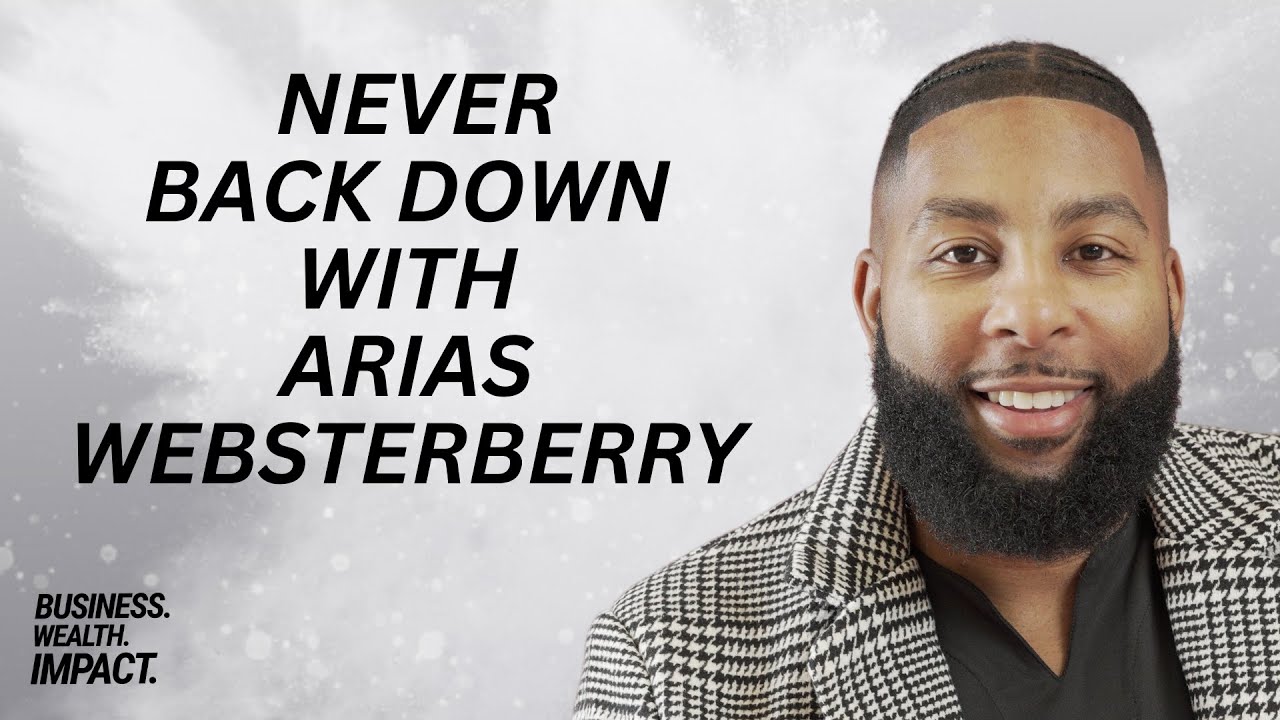
Never Back Down: How Failure Fuels True Success. Business Wealth Impact with Jeanne Omlor, BWI #117, November 2024.
Diversifying before you need to is a systems problem, not a strategy problem. Ignite Funnels is where we build that part.


