The $40,000 Decision That Cost Us a Festival
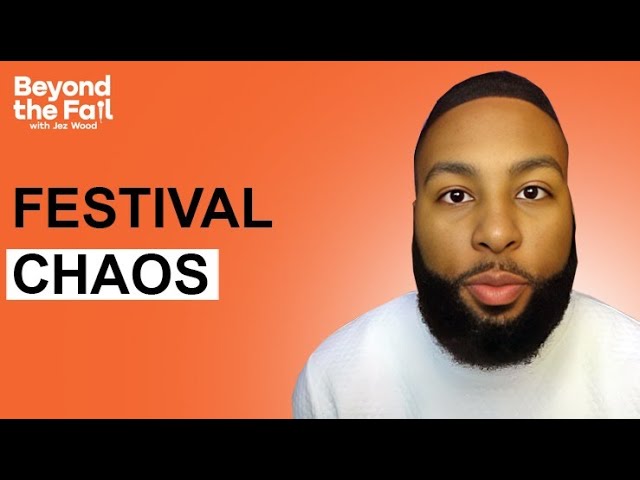
I went on Beyond the Fail with Jez Wood to talk about the most expensive year of my life. It's a UK show built entirely around business failure, which meant there was nowhere to hide, and that turned out to be the right format for this story.
The short version: at 21 I left a corporate sales job to help build a music festival at the Los Angeles Sports Arena. Seventeen thousand people came. Ludacris, Common, Janelle Monae and Mix Master Mike performed. It never turned a profit.
The $40,000 decision
Everyone assumes the lesson from a failed event is about the chaos. It isn't. The chaos is memorable, but it wasn't what killed us.
I had negotiated a deal with Clear Channel Outdoor for somewhere around a hundred billboards across greater Los Angeles, for about six weeks, at roughly $40,000 to $50,000. I'd spent three weeks getting the price down, and I got there by agreeing to add TV spots from another division. Combined with the radio deal, the street team and the online advertising we already had, those billboards were the piece that would have made the event undeniable in that city.
The decision went to committee and the answer was no. Too much money.
Our budget was around $800,000. The billboards were five percent of it. My estimate is that we lost $200,000 to $300,000 in ticket sales we would otherwise have made. A year later my investor called me and said he had no idea why he hadn't listened.
That's the lesson, and it's the one I've carried into every business since: the cheapest line item to cut is almost never the cheapest decision to make. I don't skimp on marketing. I don't skimp on people. I'll negotiate once I know what something is actually worth, but I don't try to grind someone down to half their price, because telling a professional their work isn't valuable is a bad trade even when it works.
And then there was everything else
Our original headliner was going to be Lil Wayne. We were a month into negotiations and had agreed a number. Then he won an award mid-negotiation and the price went up $100,000 in 24 hours. I got the call at seven in the morning telling me we needed a new artist.
We lost a venue and had to find another, which is how we ended up at the Sports Arena. One of the people involved turned out to be taking kickbacks from vendors he was pushing us to hire. There was a small fire on stage during the show. Legal disputes followed for a long time afterwards.
And I worked myself into a compacted spine. I hadn't been sleeping or eating properly for months, and two days before the event a doctor told me to stay off my feet. I ran most of the biggest night of my career from a wheelchair.
The part I still think about
A vendor we had paid to handle artist transport didn't show. Janelle Monae landed at LAX with her entire band and equipment and no car. This was her first stadium performance.
Most artists would have gotten back on the plane and had their lawyer call us. Her team asked whether we'd cover taxis if they sorted it themselves. They took cabs to the venue and she gave the best performance of the night.
The other thing I still think about is my investor, Derek Patterson. He had raised the capital from people he knew, and when it went wrong he said he would pay every penny back. It took years, but he made good on it. I was 21 and I did not understand at the time what I was watching. I do now. You honour what you said you'd do, especially when it didn't go the way you planned, and especially when other people didn't honour theirs.
Why I talk about it
It took me two or three years to try anything entrepreneurial again. At the time I thought failing at something meant I was a failure, because the only stories I'd been shown were the ones that went straight up.
That gap cost me more than the money did. The recovery has gotten faster every time since. Three years became eighteen months, then nine, then six. Now a setback puts me in a funk for a month and I keep operating through it.
When business owners tell me I seem to have an answer for everything, the honest explanation is that I've lost at a lot of things. You can take the dividends from my failures without paying for them yourself. That's most of why I do interviews like this one.
Watch the full conversation
Find it on your platform of choice
Episode: Festival Chaos, 300k Loss, and Legal Disputes: Harsh Entrepreneurial Lessons. Beyond the Fail with Jez Wood, January 2025. Runtime 77 minutes.
Thanks to Jez for a conversation that didn't let me round off the edges.
Most businesses don't fail from a lack of effort. They fail because the systems aren't there when it matters. Ignite Funnels exists to fix that part.


