Never Read Your Own Press Clippings
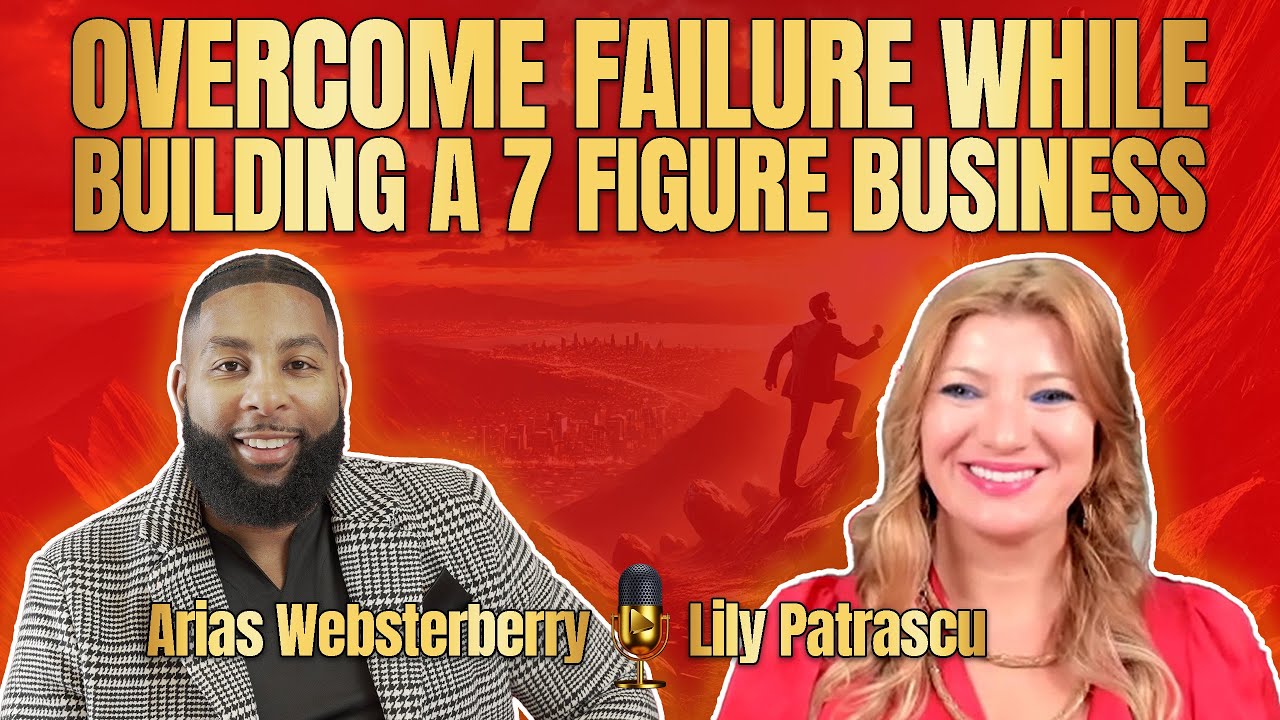
Lily Patrascu asked me something on Awakened Titans that most hosts don't. Not how I handle failure, but how I handle the people who vanish during it.
That's the harder question, and the more useful one.
Never read your own press clippings
When things are going well you acquire a lot of people. Some of them are genuinely there. Many are attached to the position rather than to you, and when you stumble they don't announce their departure. They simply stop answering.
The defence isn't cynicism. It's knowing the difference between a friend, a confidant and an associate, and keeping those categories straight in your head before you need them. If you can't tell which is which while you're winning, the sorting happens for you later, and it's painful.
It also helps to never read your own press clippings. If you don't believe the version of you that appears when you're up, you won't have to survive the version that appears when you're down. It's never as good as you think it is and it's never as bad as you think it is.
And when you do need to be honest about where you are, don't take that to the new arrivals. Take it to the people who knew what you were building before there was anything to be attached to.
Be careful who you hand your vision to
Lily also asked how you protect your reputation from people determined to misread you. My honest answer is that you largely can't. If someone intends to misrepresent you, they will.
What you can control is who you tell.
When I tell a friend of mine — someone who started out sleeping on his mother's couch and now makes a few million a year — that I want to help a hundred entrepreneurs each make a million dollars, he asks when I'm starting. When I say the same sentence to other people, the response is a slow "how, exactly?"
Neither reaction is about me. It's about the size of the world the listener lives in. Most people are average, and not for lack of capacity — it's self-limiting belief. If you hand your ambition to someone with a small sense of what's possible, you will not end up bigger than their imagination.
So share the vision with people who have appetite. And spend less energy on other people's opinions and more on the work that eventually makes the argument for you.
Two failures worth naming
The Timbaland show. Early on I put on a night with a producer who'd worked with basically everyone. We had maybe sixty to a hundred people in a room built for a thousand. He spent the evening visibly wondering why he'd come. I could have decided that night that I wasn't built for this. I went on to put on events for tens of thousands of people.
The $122,000 chargeback. I ran a conference, oversold it, had an overflow room, and communicated none of it well. We also had a no-refund policy that existed in my head and nowhere in my terms of service. When the dispute went to the bank, I had nothing to point at.
That one cost more than the money. But every agreement I've signed since carries a refund policy, and the client signs it. An expensive lesson only stays expensive if you don't install the fix.
Where to take it when it's bad
There's a particular loneliness in leading something while privately falling apart. You can't take it to your community — they came to you to solve their problem, not to hear yours. So people suffer in silence and call it professionalism.
Get a mentor or a coach. Someone further down the road who can tell you whether this is a genuine catastrophe or a bad fortnight, because from inside it you cannot tell the difference.
If you don't have one, go looking. Business collectives, government programmes for entrepreneurs, or the direct approach: message a director or a founder at a larger company in your industry and ask, humbly, for a coffee. You'd be surprised how often people say yes.
Getting comfortable being uncomfortable
Lily asked how someone becomes thick-skinned enough to ask for what they want. Some people wait years to ask a question that would have taken thirty seconds and probably got a yes.
Do the thing that scares you, and do it quickly. If it's public speaking, join something like Toastmasters, because it forces you to organise your thinking, stand up, and take the reaction. It's repetition, not talent.
Entrepreneurship is doing things you haven't done. Put yourself somewhere uncomfortable often enough and the discomfort stops being a reason not to move. At that point you're difficult to stop.
The routine underneath it
I'm up at five or five-thirty. I pray, read, meditate, review my goals, visualise them, work out. It sounds unremarkable until the week goes badly and the routine is the only thing that didn't.
The reason to build it now is that you can't build it during a crisis. You can only lean on it.
Watch the full episode
Find it on your platform of choice
Episode: Overcome Failure While Building A 7 Figure Business. Awakened Titans with Lily Patrascu, November 2024. Runtime 29 minutes.
Thanks to Lily for pushing past the easy version of the question.
Most of what looks like a mindset problem in a business turns out to be a missing system. Ignite Funnels is where we build that part.


